
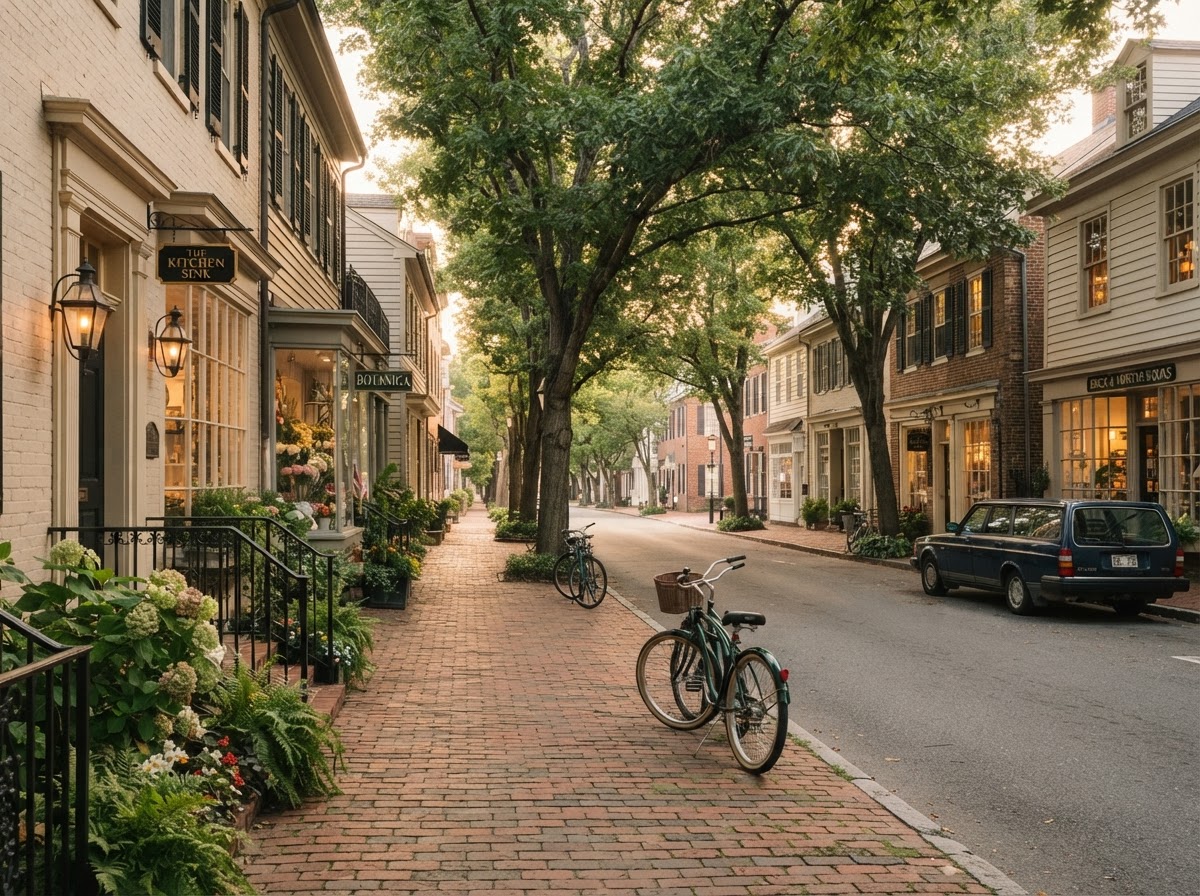
Chapter 1
Welcome to Delaware
Where the Mid-Atlantic meets the coast
Delaware is a small Mid-Atlantic state with an outsized sense of place. Bordered by Pennsylvania to the north, Maryland to the south and west, and the Atlantic Ocean and Delaware Bay to the east, it packs coastline, farmland, small towns, and suburban centers into a compact footprint. For many newcomers, that compactness is the appeal — you can live near the beach, drive to a major city, and still reach open countryside within the same afternoon.
Three counties, one state
Delaware is divided into three counties, each with a distinct character. New Castle County in the north is the most populous and suburban, anchored by the Wilmington area and within easy reach of Philadelphia. Kent County in the center is a mix of Dover (the state capital), smaller towns, and agricultural land. Sussex County in the south is the largest by area, the most rural overall, and home to Delaware's Atlantic beach resorts and growing retirement and second-home communities.
Regional lifestyles
- Coastal — Atlantic beaches, boardwalks, seasonal resort energy, and year-round beach towns.
- Suburban — denser residential neighborhoods, shopping corridors, and shorter commutes in the north.
- Small-town — historic downtowns, main streets, and a slower civic pace throughout Kent and Sussex.
- Rural — farmland, country roads, and larger parcels where utilities and services require more planning.
Getting here and getting around
Major corridors include Interstate 95 and U.S. Route 13 in the north, and U.S. Route 13, Route 1, and Route 113 running south through Kent and Sussex. The Delaware Department of Transportation (DelDOT) maintains roads, transit, and traveler information. Commercial air travelers typically use Philadelphia International Airport (PHL) or Baltimore/Washington International (BWI); smaller fields serve general aviation. Always check actual travel times from a specific property rather than relying on averages.
Chapter 2
Understanding Delaware's Three Counties
A fair comparison, not a ranking
There is no universally 'best' county in Delaware — the right fit depends on what your household prioritizes. This chapter compares the three counties on the same dimensions so you can weigh them against your own needs: commute, schools, housing style, recreation, and budget.
New Castle County
The northernmost and most populous county. Suburban development surrounds Wilmington and reaches north toward the Pennsylvania line. Housing ranges from historic city neighborhoods and established suburbs to newer subdivisions. Proximity to Philadelphia and northern Delaware's employment centers shortens commutes. Recreation includes Brandywine Valley parks, cultural institutions, and river access. Winter weather is somewhat colder than the coast.
Kent County
The central county, with Dover as the state capital and a mix of government, agriculture, and distribution employers. Housing tends to be more affordable than the northern suburbs, with a blend of established towns, new construction, and rural parcels. Bay beaches and wildlife areas sit to the east. Dover Air Force Base is a major local presence. Travel times to the beach or to Wilmington are moderate from most of the county.
Sussex County
The largest and southernmost county, and the focus of this guide. Sussex combines productive farmland with Delaware's Atlantic beach resorts — Lewes, Rehoboth Beach, Bethany Beach, and the communities between and inland. It has become a popular destination for retirees, second-home buyers, and families seeking a slower pace. Housing ranges from beachfront condominiums to inland farms and rural acreage. Seasonal population swings are significant near the coast.
Questions to ask yourself
- Where will I or others in my household work, and what is the realistic drive each way?
- Do I want beach proximity, suburban density, or rural space?
- What property type fits my budget and maintenance tolerance?
- What services — healthcare, shopping, schools — must be within a reasonable distance?
Chapter 3
Explore Sussex County
Coastal resorts, country towns, and everything between
Sussex County is where most visitors first encounter Delaware, and where many decide to stay. The eastern edge is the Atlantic coast — Lewes at the mouth of the Delaware Bay, Rehoboth Beach and Dewey Beach on the open Atlantic, and Bethany Beach to the south. Just inland, towns like Millsboro, Dagsboro, Frankford, and Ocean View sit between the beaches and the farmland. Further inland, Georgetown (the county seat) and Seaford, Laurel, and Milford anchor civic and commercial life, while the western and southern reaches remain largely agricultural.
The detailed community profiles in the Communities section use a consistent format so you can compare communities side by side. Read them as starting points, not verdicts — the best way to understand a place is to visit, talk to locals, and ask a knowledgeable local professional about specifics.
Start with Georgetown — the county seat
Delaware's historic heart of Sussex County. Explore Sharon Abel's dedicated Georgetown local guide.
Chapter 4
Cost of Living and Household Planning
Categories to compare, not promises
Delaware is frequently described as 'tax-friendly,' and for many households it can be — but whether it is cheaper than where you live now depends entirely on your own income sources, property, and spending. This chapter lays out the categories worth comparing so you can build an honest budget.
What to compare
- State income tax — Delaware levies a graduated state income tax; some income sources (such as certain pensions or Social Security) may be partly or fully exempt depending on your circumstances.
- Property tax — rates and assessment practices vary by county, school district, and municipality; Sussex generally has lower residential rates than New Castle, but confirm the bill for a specific property.
- Sales tax — Delaware has no state or local sales tax on most purchases, which affects the everyday cost of goods.
- Insurance — homeowners, and where applicable flood and wind/hurricane coverage; coastal and rural policies cost more and may carry higher deductibles.
- Utilities and internet — electric service and internet availability vary by provider and area; rural parcels may have fewer high-speed options.
- Transportation — fuel, vehicle wear, and commute distance; rural living often means more driving.
- Community fees — HOA, condo, or amenity fees, common in beach-area and planned communities.
- Maintenance — coastal homes, larger lots, and older properties can carry higher upkeep costs.
- Childcare, education, and healthcare — availability and cost vary sharply between the coast, towns, and rural areas.
Chapter 5
Understanding the Delaware Housing Market
The buying process and what to investigate
Buying a home in Delaware follows the same broad stages as elsewhere — set priorities, get your financing in order, search, evaluate, offer, inspect, and close — but several Delaware-specific factors deserve attention. Use this chapter as a framework, and lean on a qualified local professional for the specifics of any property.
Before you search
- List what you need versus what you want, in priority order.
- Get preapproved with a lender so you understand your true budget and can act quickly.
- Research the areas you are considering at different times of day and year.
Evaluating a property
Look beyond the asking price. Compare the property to recent comparable sales, weigh condition and deferred maintenance, and understand recurring costs — taxes, insurance, fees, and utilities. For Delaware properties, also investigate the items below, which are especially common in Sussex County.
- Water source — public water or a private well; wells require testing and maintenance.
- Sewer or septic — septic systems need inspection and have upkeep and replacement costs.
- Flood zone — check the FEMA Flood Map Service Center and ask how it affects insurance and lending.
- Survey and easements — confirm boundaries, access, and any rights that affect use.
- Land-use and zoning restrictions — relevant for rural parcels, additions, or outbuildings.
- HOA or condo documents — review fees, rules, reserves, and pending assessments.
New construction, land, and manufactured homes
New construction can offer warranties and modern layouts but may carry builder timelines and community fees. Rural land may require well, septic, driveway, and site-work costs before building. Manufactured homes can be an affordable option; their financing, foundation type, and zoning treatment differ from site-built homes and must be verified for the specific unit and location. Do not assume any parcel is buildable, financeable, or insurable without checking with the appropriate professionals.
Chapter 6
Schools, Families, and Everyday Life
How to research, not what to assume
If you are moving with children, the right approach is to research options directly with the institutions rather than relying on third-party rankings. School assignments in Delaware can depend on your exact address, district, and choice programs, and they change over time.
What to research
- Public school districts and your specific address's assigned school.
- Charter and magnet school options, application windows, and transportation.
- Private and parochial schools, including admissions and tuition.
- School bus eligibility and routes for your address.
- Childcare, preschool, and after-school program availability.
- Public libraries, recreation programs, and parks.
- Pediatric and family healthcare providers accepting new patients.
- Community calendars and family activities in your target town.
Chapter 7
Transportation and Getting Around
Check real times, not averages
Most Delaware households rely on a personal vehicle, especially in Sussex County. Knowing the major corridors helps you estimate access, but the only reliable way to plan a commute is to check actual travel times from the specific property at the times you will actually travel.
Key corridors
- I-95 — the northern express corridor connecting to Philadelphia and beyond.
- US-13 and DE-1 — north–south routes through Kent and into Sussex.
- US-113 — a southern inland route serving western Sussex communities.
- Coastal Highway (DE-1) — the main access to the Atlantic beaches, congested in summer.
Other considerations
- Public transit is limited; DART First State operates fixed routes and paratransit in some areas.
- Commercial airports: Philadelphia (PHL) and Baltimore/Washington (BWI) are the nearest major hubs.
- Seasonal traffic near the beaches is heavy in summer; plan off-peak trips where possible.
Chapter 8
Delaware Outdoors and Lifestyle
Beaches, parks, history, and community
Delaware's outdoors span saltwater beaches and bays, state parks and wildlife areas, farmland, and historic towns. The contrast between the busy summer coast and the quiet inland countryside is part of what defines living here.
Ways to explore
- Beaches and coastal recreation — swimming, surf fishing, paddling, and walking the shorelines.
- State parks — Cape Henlopen and Delaware Seashore are among the most visited; find the full system via Delaware State Parks.
- Cycling and trails — the Junction & Breakwater Trail and other paths link coastal communities.
- Boating and fishing — marinas, charter fishing, and bay access throughout Sussex.
- Historic districts and heritage — Lewes, Milton, and other towns preserve Delaware's colonial and maritime past.
- Festivals, arts, and markets — community events and farmers markets run through the warmer months.
Chapter 9
Moving Checklist and Timeline
Actionable steps by stage
Use this timeline to stay organized. Confirm deadlines and procedures with the relevant state agency — they change, and your specific situation may add steps.
Before choosing a community
- Research counties, towns, and commute distances.
- Visit at different times of day and year.
- Draft a household budget including taxes, insurance, and fees.
Before making an offer
- Get lender preapproval.
- Identify must-have inspections (well, septic, flood, survey).
- Review HOA or condo documents if applicable.
After an offer is accepted
- Schedule inspections within contingency deadlines.
- Confirm financing and lock terms with your lender.
- Order insurance, including flood if required.
Before closing
- Complete a final walkthrough.
- Confirm closing figures and bring required identification.
- Arrange utilities transfer and moving services.
Two weeks before moving
- Submit a USPS change of address.
- Notify banks, subscriptions, and services.
- Confirm mover, packing, and a moving-day essentials box.
Moving week
- Transfer or disconnect utilities.
- Carry documents and valuables personally.
- Do a final walkthrough of the old home.
First 30 days in Delaware
- Register your vehicle with the Delaware DMV.
- Obtain a Delaware driver's license within the required window.
- Register to vote and update records.
- Enroll children in school and confirm transportation.
First 90 days in Delaware
- Establish local healthcare providers.
- Explore community resources and recreation.
- Organize homeownership records and warranties.
Chapter 10
Your First Month in Delaware
Settling in, practically
The first month is about turning a new house into a home and a new town into a community. Balance the administrative tasks with real exploration — both matter.
Practical priorities
- Complete vehicle and licensing tasks (see the moving checklist).
- Find local healthcare and fill any prescriptions.
- Locate the nearest hospital, urgent care, and pharmacy.
- Set up utilities, internet, and home services.
- Update your address everywhere it matters.
Get connected
- Visit the library and recreation department.
- Attend a community event or farmers market.
- Explore nearby towns to learn the region's rhythm.
- Keep a running list of questions for local professionals.
Chapter 11
Planning Your Move: Administrative Guide
Agencies and what to confirm
This compact administrative reference gathers the official touchpoints you are most likely to need in the first months. Full links live in the Official Resources section; the entries here name what to confirm.
- Delaware Division of Motor Vehicles — vehicle registration and driver's licensing windows.
- DelDOT — road conditions, transit, and traveler information.
- Delaware Division of Revenue — state income tax filing and exemptions.
- County offices — property assessment, address, and records by county.
- School district offices — enrollment, assignment, and transportation.
Chapter 12
Your Relocation Planning Worksheet
Printable, interactive, private
The interactive worksheet in this guide lets you record your priorities, timeline, financing readiness, must-have amenities, and questions for a real estate professional. Your entries are saved only in your own browser and never transmitted unless you choose to submit a question. You can print the completed worksheet or download it. Find the live worksheet on the Relocation Guide route and a standalone version in the Contact section.
Your Relocation Planning Worksheet
Your answers stay in your browser only. Print or download when ready.
Ready to Discuss Your Worksheet with Sharon?
Sharon Abel can review your answers, suggest tailored Sussex County communities, and verify parcel-specific requirements.
Sharon Sells, You settle in!
Ready for your next step?
Send Sharon your questions or request a personalized relocation consultation. Every submission notifies Sharon directly.
Digital Business Card
Sharon Abel · REALTOR®
Coldwell Banker Premier · Sussex County, Delaware

Click the card above to open Sharon's interactive digital business card.
"With Abel, your home is possible"